Let’s be honest – how many times have you dragged yourself to the gym, stared at the same four walls for an hour, and left feeling… fine ? Just fine. Not energised. Not alive. Just done. There’s nothing wrong with a treadmill, but there’s also nothing particularly exciting about it either.
Now imagine this instead : you’re up at 5am, boots on, cold air hitting your face, walking through a forest or standing knee-deep in a river waiting for a bite. That’s a different kind of workout. And if you want to explore that world seriously, a site like chasse-peche-evasion.fr is a good starting point – it covers hunting and fishing with real depth and passion, the kind of content that actually makes you want to get outside.
Why “Getting Fit Outdoors” Is Not Just a Trend
 There’s a growing body of research – and frankly, a lot of common sense – pointing to the fact that exercising in nature does more for your body and mind than the same effort indoors. A 2019 study published in Scientific Reports found that spending at least 120 minutes a week in natural environments was associated with significantly better health and wellbeing. Two hours. That’s it.
And the beauty of outdoor sports is that those two hours don’t feel like a workout. They feel like an experience.
Hunting : The Full-Body Workout Nobody Talks About
People underestimate hunting. Massively. When you think about what a hunting day actually involves – waking before dawn, hiking across uneven terrain with a pack on your back, staying low and quiet for extended periods, carrying game back – you’re looking at a genuinely demanding physical activity.
Here’s what your body is doing on a hunting day :
Cardiovascular endurance. A serious hunting trip can involve 10 to 20 kilometres of walking, often on rough ground. That’s more than most people cover in a week of “going to the gym.”
Muscular strength and stability. Uneven ground forces your stabiliser muscles – ankles, knees, hips, core – to work constantly. No machine replicates that.
Mental focus and patience. This one surprises people. Hunting demands a level of sustained concentration that’s almost meditative. You’re reading the environment, staying still, controlling your breathing. It’s honestly good for anxiety if you give it a chance.
Perso, I find that an hour sitting still in a forest does more for my head than 45 minutes on an elliptical. Maybe that’s just me. But I don’t think so.
Fishing : Underrated, Underestimated, and Actually Demanding
Fishing gets a bit of a lazy reputation – sitting on a bank, waiting, snacking. And sometimes it is exactly that. But active fishing ? That’s a different story.
Fly fishing, for example, is a legitimate upper body workout. The casting motion – repeated hundreds of times over a session – works your shoulders, forearms, wrists and core. Do it for four hours on a river and tell me your arms aren’t burning.
Shore fishing or wade fishing adds lower body load. You’re standing for hours, adjusting your balance, fighting currents. It sounds gentle. It isn’t.
And then there’s the mental side. Fishing forces you to slow down, read water, adapt. In a world where most of us are overstimulated and under-recovered, that kind of deliberate, focused calm is genuinely therapeutic. Research on “attention restoration theory” suggests that natural environments help restore our capacity to concentrate – and fishermen have known this intuitively for centuries.
Hiking and Trail Running : The Obvious Ones (But Still Worth It)
Right, let’s not ignore the classics. Hiking and trail running remain two of the most effective and accessible ways to get fit outdoors – and for good reason.
Hiking burns between 400 and 700 calories per hour depending on terrain and pack weight. It strengthens legs, glutes and core, improves cardiovascular fitness, and – this is key – it’s low-impact enough that most people can do it regularly without wrecking their joints.
Trail running takes it up a notch. The constant variation in terrain means your neuromuscular system is firing on all cylinders. You’re not just running – you’re reacting, adapting, balancing. It builds a kind of functional fitness that road running doesn’t touch.
A few things to keep in mind if you’re starting :
– Start with the terrain, not the distance. A 5km trail can be tougher than a 10km road run.
– Get proper footwear. Trail shoes with grip are not optional. A twisted ankle on a wet root is a very fast way to end your season.
– Go slow to go far. Most beginners burn out in the first 20 minutes. Ease in. The trail isn’t going anywhere.
Cycling Outdoors vs. Indoor Cycling : Not Even Close
I know some people swear by their Peloton. And look – fair enough, it has its place. But outdoor cycling on real roads or mountain bike trails ? The engagement is completely different.
You’re navigating. You’re reacting to wind, gradient, surface. Your core is active the whole time to keep you balanced. And psychologically, you’re moving through a landscape – which just feels better. Studies consistently show that outdoor exercise improves mood more effectively than the same effort indoors. That’s not opinion, that’s data.
How to Build an Outdoor Fitness Routine That Actually Sticks
Here’s the honest truth : the best fitness routine is the one you enjoy enough to keep doing. And for a huge number of people, especially those who’ve tried and quit the gym cycle more than once, outdoor sports are the answer.
A simple framework to get started :
Two to three sessions a week outdoors. Could be a hike, a fishing morning, a trail run, a cycling loop. Mix it up.
One “active outdoor activity” per weekend. Something that lasts more than two hours – hunting, a long hike, a full day on the water. This is your big aerobic load.
Don’t obsess over metrics. You don’t need to track every calorie or kilometre. Get outside, move, breathe. The rest follows.
Dress for the weather, not for the Instagram. Honestly, a lot of people avoid outdoor sport because they haven’t invested in decent waterproofs or layering. One good base layer and a waterproof jacket changes everything.
The Mental Health Angle – Because It Matters
We’ve touched on this, but it deserves its own moment. Physical fitness and mental health are not separate conversations. They’re the same conversation.
Being outdoors – especially in wild or semi-wild environments – reduces cortisol (your stress hormone), lowers blood pressure, and improves sleep quality. We’ve known this for a while. What’s newer is the understanding that purposeful outdoor activity – where you have a goal, like catching a fish or reaching a summit – adds an additional layer of mental reward. The sense of accomplishment is real, and it’s different from hitting a step count.
Hunting and fishing, in particular, tap into something very deep. There’s a reason humans have been doing both for over 300,000 years. It connects you to instinct, environment, season. It sounds a bit romantic, maybe. But go spend a full day outdoors with a real objective and tell me you don’t sleep better that night.
Getting Started : What You Actually Need
 You don’t need to spend a fortune. Seriously. Here’s a realistic starter list for outdoor fitness :
For hiking or trail running: good trail shoes, a small daypack, a waterproof layer, water and food. That’s basically it to start.
For fishing: a basic rod and reel setup can be found for under £50. A fishing licence in the UK is around £30 a year. The barrier to entry is genuinely low.
For hunting: this requires more investment in terms of licensing and safety training, but it’s accessible. Look into your local hunting regulations – the process is more straightforward than most people assume.
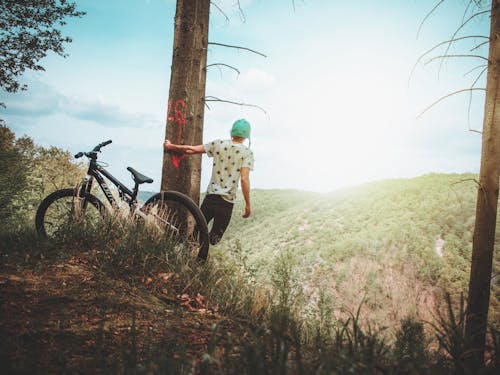
For cycling: any decent second-hand bike will do to start. Don’t let “not having the right bike” be an excuse.
Final Thought : Nature Is the Best Gym You’ve Never Paid For
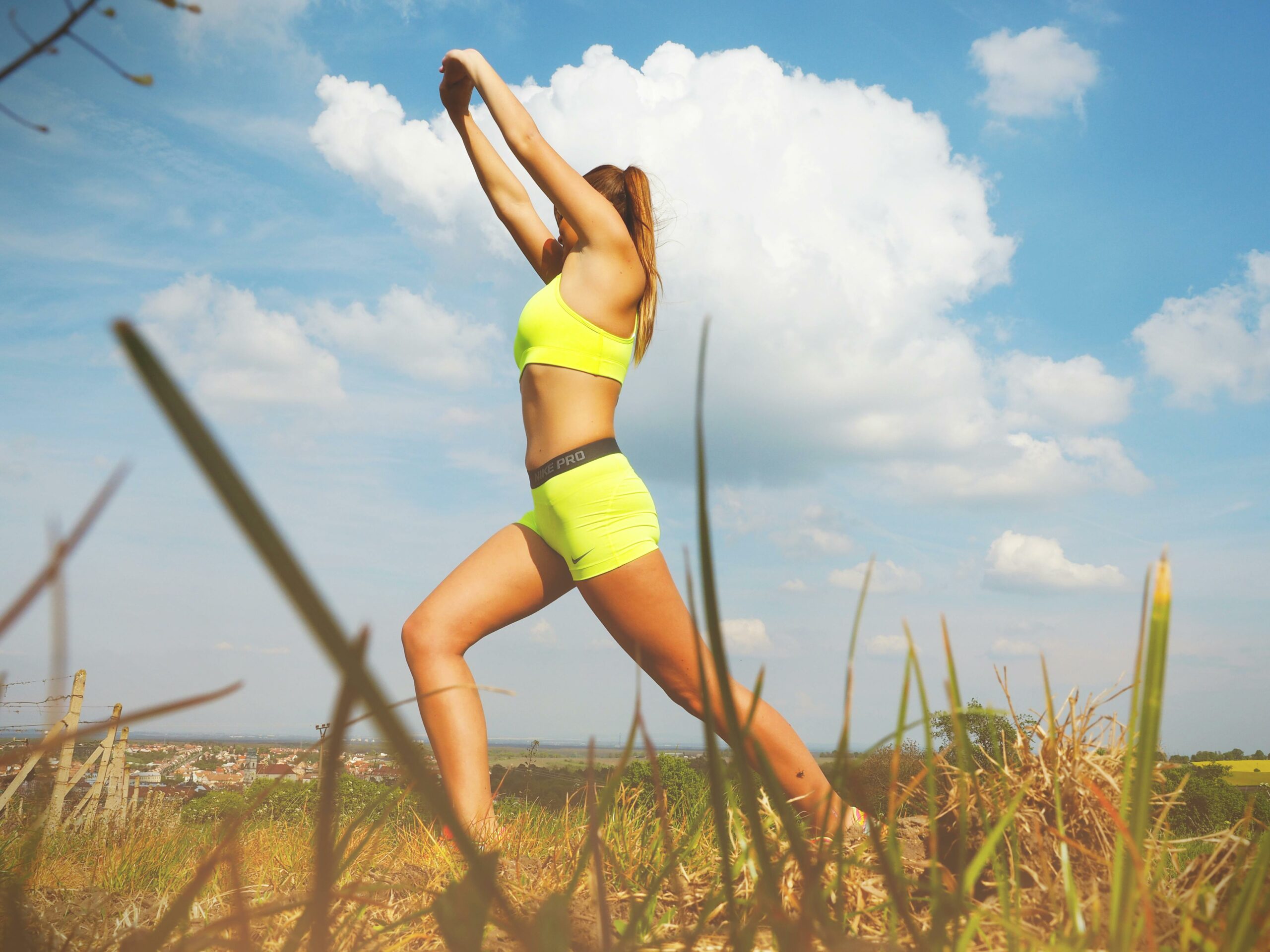
The gym has its place. No argument there. But if you’ve been struggling to stay motivated, if you find indoor exercise a bit soul-destroying, if you want fitness that feels like something more than a chore – outdoor sport is worth a serious try.
Hunting, fishing, hiking, trail running, cycling. All of them build real fitness, real mental resilience, and a relationship with the natural world that a spin class just can’t replicate. You’ll come home tired in the right way. Tired and actually happy about it.
So – what are you waiting for ? The forest isn’t going to walk itself.